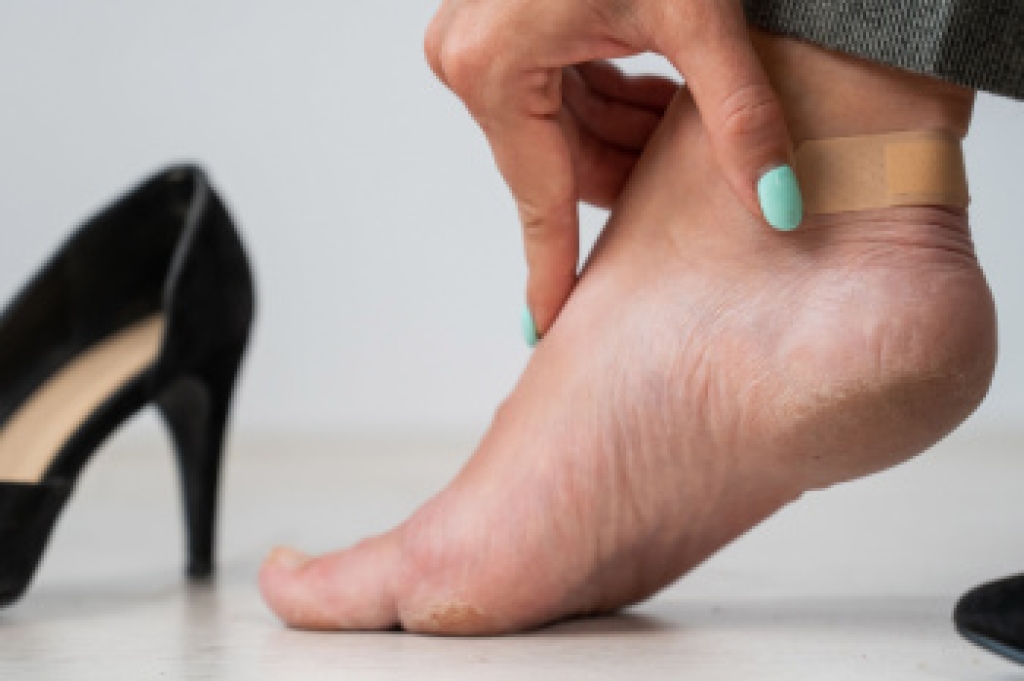
Blisters are pockets of fluid that form beneath the outer layer of skin. They develop when repeated rubbing or pressure damages the skin and causes fluid to collect in the affected area. On the feet, blisters frequently occur on the heels, toes or balls of the feet. Activities that involve extended periods of walking, running or standing can increase the risk. Shoes that are too tight can also contribute to blister formation. Footwear that lacks proper support may create extra movement inside the shoe, leading to friction and irritation. Blisters can cause discomfort, tenderness and pain that interferes with daily activities.
Although many blisters begin as a minor problem, they can become more serious when the skin breaks open. An open blister creates an entry point for bacteria, which can lead to infection. Signs of infection include redness, swelling and drainage. Additional symptoms may include warmth around the area or increasing pain. People with diabetes or circulation problems should take blisters seriously because even small skin injuries can develop into larger foot complications. Prompt evaluation by a podiatrist can help identify concerns before they worsen and can reduce the risk of long-term problems.
A podiatrist can determine the cause of recurring blisters and recommend treatment based on the condition of the skin and foot structure. Treatment may involve protective dressings, pressure-relieving devices or recommendations for properly fitted shoes. A podiatrist can also evaluate the way a patient walks to identify abnormal pressure points that contribute to repeated friction. Addressing these underlying factors helps reduce discomfort and lowers the chance of future blisters. Professional care is especially important when blisters are painful, recurrent or show signs of infection. Early treatment can help preserve skin health and keep patients active and comfortable. If you frequently develop blisters which have become infected, it is suggested that you schedule an appointment with a podiatrist for effective treatment solutions and prevention tips.
Blisters may appear as a single bubble or in a cluster. They can cause a lot of pain and may be filled with pus, blood, or watery serum. If your feet are hurting, contact one of our podiatrists of Highpoint Foot & Ankle Center. Our practitioners can provide the care you need to keep you pain-free and on your feet.
Foot Blisters
Foot blisters are often the result of friction. This happens due to the constant rubbing from shoes, which can lead to pain.
What Are Foot Blisters?
A foot blister is a small fluid-filled pocket that forms on the upper-most layer of the skin. Blisters are filled with clear fluid and can lead to blood drainage or pus if the area becomes infected.
Symptoms
(Blister symptoms may vary depending on what is causing them)
- Bubble of skin filled with fluid
- Redness
- Moderate to severe pain
- Itching
Prevention & Treatment
In order to prevent blisters, you should be sure to wear comfortable shoes with socks that cushion your feet and absorb sweat. Breaking a blister open may increase your chances of developing an infection. However, if your blister breaks, you should wash the area with soap and water immediately and then apply a bandage to the affected area. If your blisters cause severe pain it is important that you call your podiatrist right away.
If you have any questions, please feel free to contact our offices located in Chalfont, Doylestown, and Hatboro, PA . We offer the newest diagnostic and treatment technologies for all your foot care needs.
